Dying Tree? 8 Signs Your Tree Needs Help Now
As homeowners in Greenville and Upstate SC, we all appreciate the beauty and shade our trees provide. But what happens when one of those trees starts to decline? Identifying a dying tree early is crucial for potentially saving it or, at the very least, preventing hazards to your property and family. At Martin Tree and Turf Care, we want to equip you with the knowledge to recognize the signs a tree is showing that indicate declining tree health. Here, we will walk you through eight key indicators of a dying tree, explaining what they mean and what steps you can take.
General 8 Signs That Your Tree Is Dying
When assessing tree health, it's important to consider the whole picture. No single sign definitively means your tree is doomed. However, the presence of multiple signs of a dying tree warrants a closer look and potentially an arborist consultation. Here are eight general signs that your tree is showing signs of stress and may be in need of professional attention:
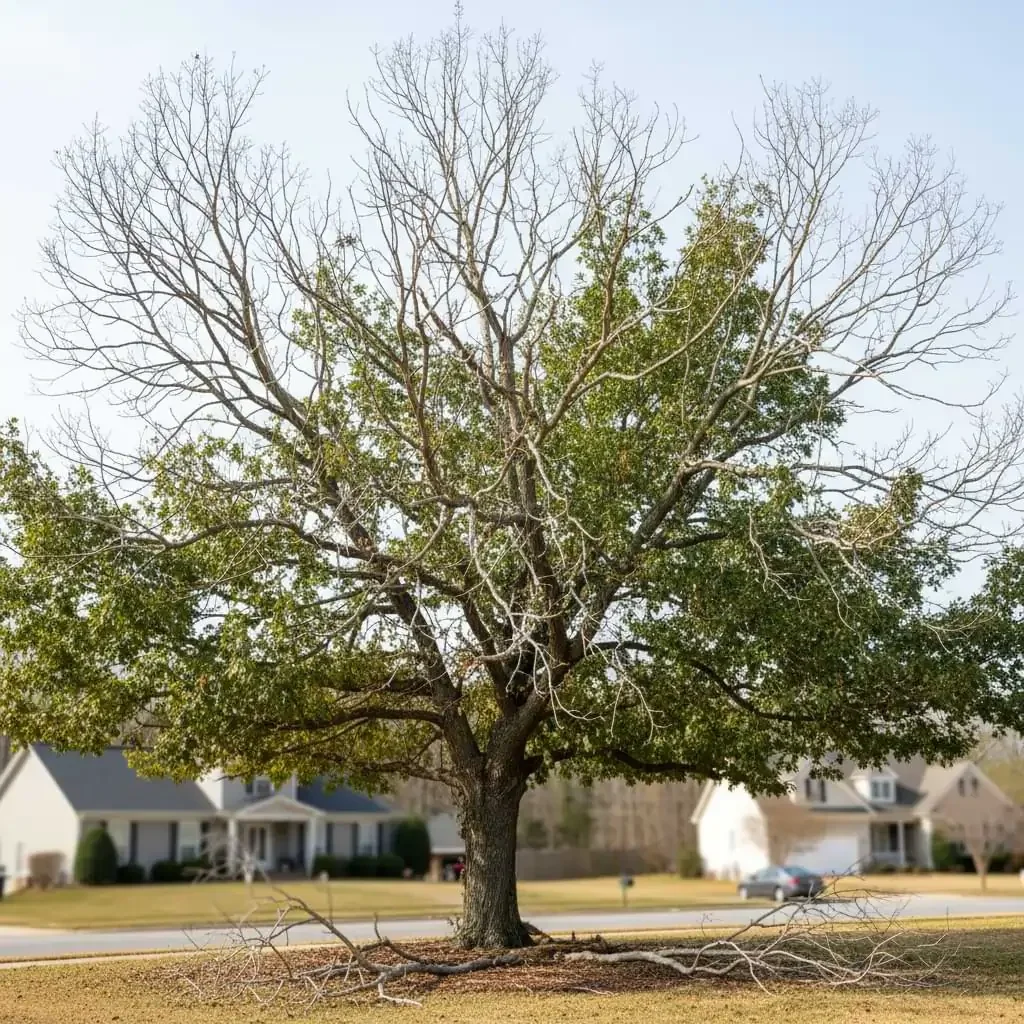
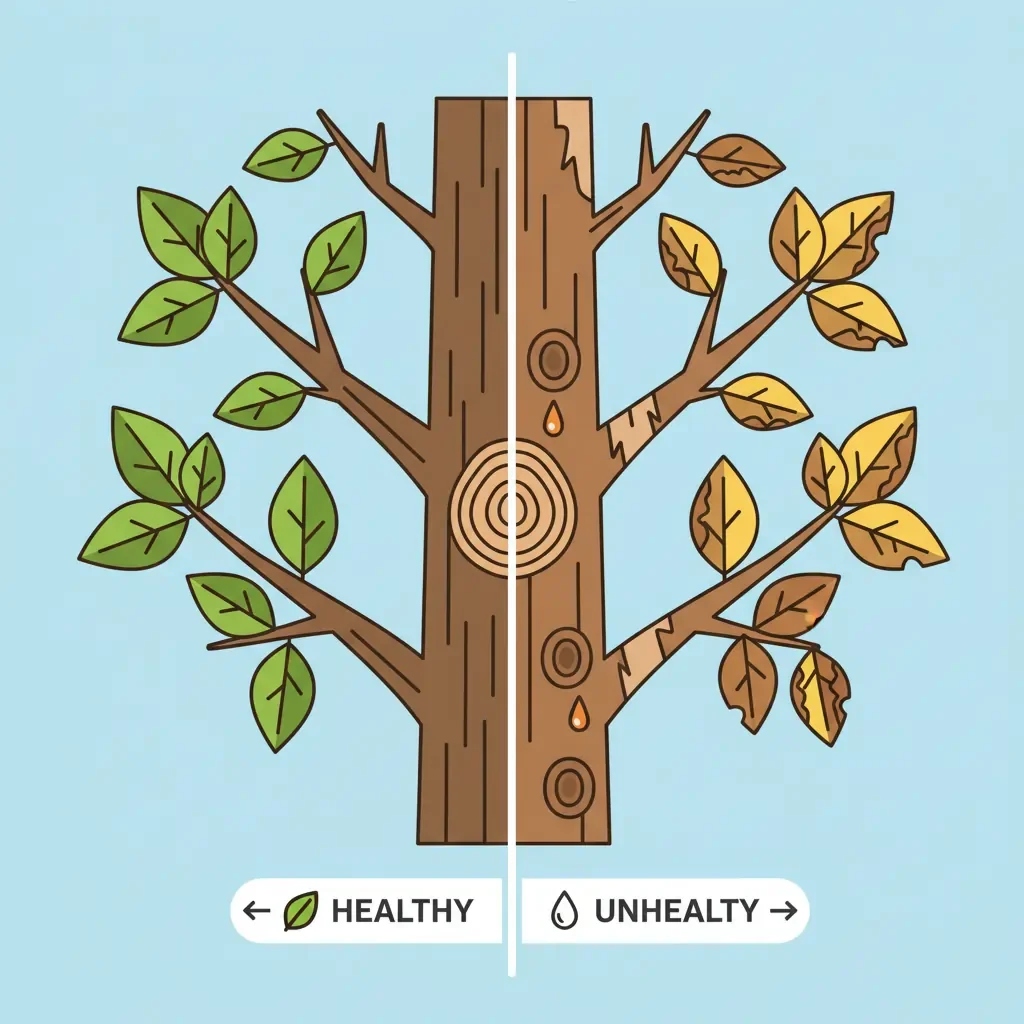
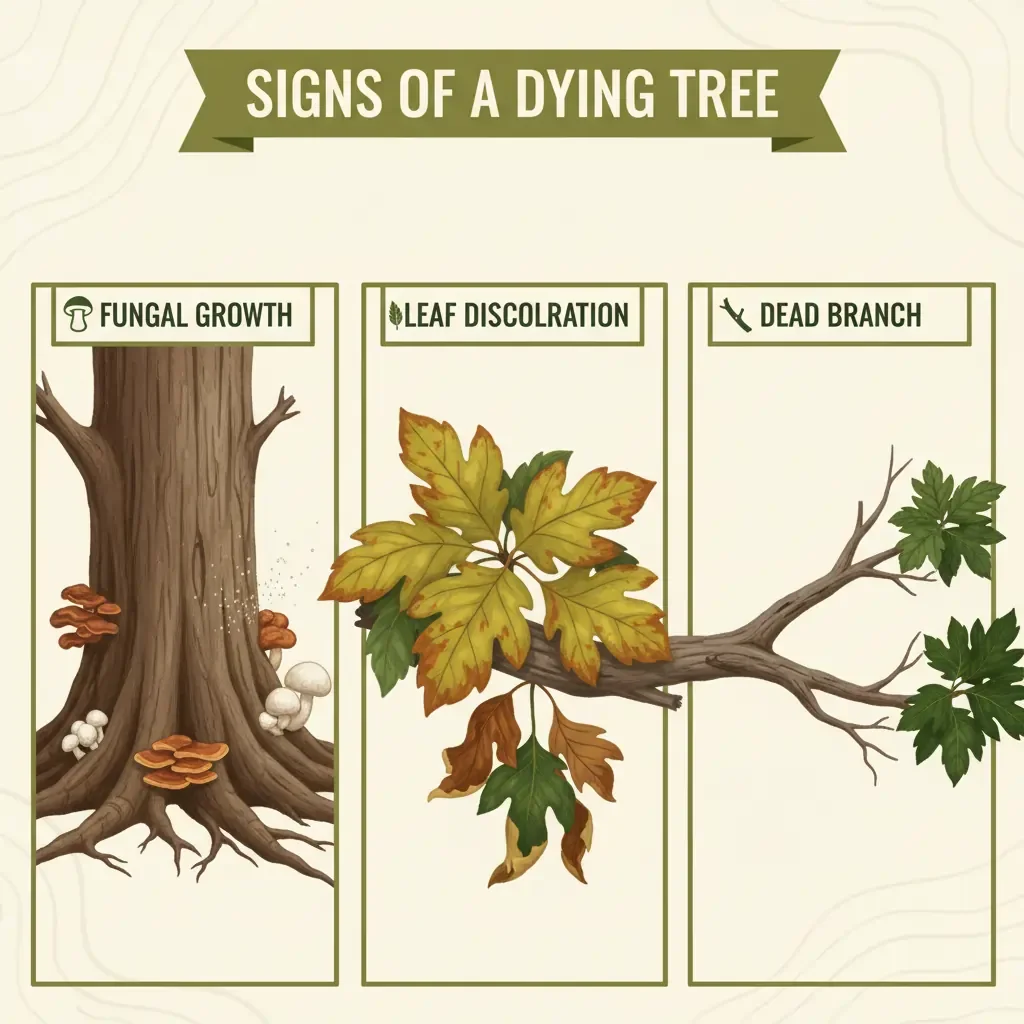
Dead Branches (Branch Dieback): One of the most obvious signs of a dying tree is the presence of dead branches. This branch dieback can manifest as entire limbs that are bare, brittle, and easily broken. The early signs of this may just be branch dieback from tips and then progressing further back towards the tree trunk. Look for signs of broken or hanging branches. A healthy tree will usually have new growth each year; a dying tree will often show a lack of new growth. Pay close attention to the upper canopy, as crown dieback signature is often most visible there. Remember that some shedding of small twigs is normal, but widespread dead branches are a major red flag.
Leaf Discoloration (Chlorosis, Necrosis): Healthy foliage is vibrant and green, appropriate for the tree species and the season. Leaf discoloration, such as yellowing leaves (chlorosis), browning leaves (necrosis), or leaves that are smaller than usual, are all signs of stress. This discolored foliage anomaly can indicate nutrient deficiencies, root problems, or tree diseases. Sudden leaf discoloration or a sudden leaf-drop event should be investigated immediately. Monitor the overall canopy for localized crown discoloration and progressive canopy thinning.
Bark Peeling (Bark Sloughing and Lesions): The bark protects the tree trunk like skin. Bark peeling beyond what is normal for the tree's species, cracked bark, cankers on the tree, or bark sloughing and lesions are all indicators of compromised structural integrity. The presence of wounds or oozing sap can also signal underlying problems. Look closely at the tree bark. Tree Bark should be intact, but sometimes you'll find damage from animals, weather, or disease.
Fungal Growth (Fungal Fruiting Bodies): The presence of fungal growth, such as mushrooms or fungal bracket proliferation on the tree trunk or around the base, is a clear indication of decay. These fungal fruiting bodies are the visible signs of a larger fungal hyphae network breaking down the wood inside the tree. While some fungi can be beneficial, the presence of many is often evidence of decay and potential instability.
Insect Infestation (Pest Infestation Hotspot): A healthy tree can usually fend off most insect attacks. However, a tree that is already stressed is more vulnerable to insect infestation. Look for signs of insect activity, such as holes in the bark, sawdust-like material (frass), or the presence of insects themselves. Certain insects, like borers, can cause significant damage and contribute to the decline of the tree. Don't just look for presence of insects, but signs of active infestation.
Root Rot (Investigating Root Collar Health): Root rot is a serious problem that can be difficult to detect above ground. Signs of root rot may include wilting leaves, stunted growth, and a general decline in vigor. To check for root rot, carefully excavate around the base of the tree to inspect the roots. Healthy roots should be firm and light-colored; rotten roots will be soft, mushy, and dark. Don't ignore the importance of monitoring vital signs when it comes to your tree's roots.
Sparse Foliage (Thinning Canopy): A healthy tree has a dense, full canopy of leaves. Sparse foliage or progressive canopy thinning is a sign that the tree is not getting enough nutrients or water, or that it is suffering from disease or pest infestation. The thinning canopy can also be a sign of root problems or soil compaction.
Soil Compaction (Compacted Root Zone Lockdown): Healthy roots need air and water to thrive. Soil compaction restricts root growth and limits the tree's ability to absorb essential nutrients and water. Signs of soil compaction include hard, dry soil, difficulty digging, and poor drainage. Compacted root zone lockdown is a serious issue that can lead to a dying tree.
Specific Examples of Dying Tree Symptoms
Let's look at some specific examples of how these signs might manifest in common trees around Greenville and Upstate SC:
Oak Trees: Oak trees are a majestic sight, but they are susceptible to oak wilt, a fungal disease that can cause rapid decline. Look for sudden wilting and browning of leaves, especially in the upper canopy. Also, watch for bark cracks and fungal mats forming under the bark.
Pine Trees: Pine needles should be green and healthy. If you notice that pine needles are turning brown or yellow, or if the tree is losing an excessive amount of pine needles, it could be a sign of pine beetle infestation or root rot. Be sure to look for signs of oozing.
Elm Trees: Elm trees are susceptible to Dutch elm disease, another fungal disease that can be fatal. Look for wilting and yellowing of leaves, followed by branch dieback. Also, watch for dark streaks under the bark.
Understanding the Underlying Causes of Declining Tree Health
Several factors can contribute to a dying tree. Finding the real cause helps you pick the right next step, and it can also flag a safety risk near your home.
Tree Diseases: Fungal diseases like oak wilt, Dutch elm disease, and Hypoxylon canker can block water flow, weaken wood, and lead to major dieback. Early clues matter, including fungal growth and visible hyphae in decayed areas.
Pest Infestations: Insects like borers, aphids, and mites drain energy and damage tissues. Once a tree is stressed, pests can multiply fast and accelerate decline.
Soil Compaction: Compacted soil limits oxygen and water in the root zone, which slows root growth and weakens the canopy. Construction traffic, trenching, and grading can cause hidden root damage that shows up later.
Root Rot: Poor drainage and overwatering can rot roots, cutting off the tree’s ability to take in water and nutrients. Stability can drop too, which raises the risk of failure in wind.
Environmental Stress: Drought, saturated soil, and extreme temperatures reduce a tree’s ability to protect itself. Reduced sap flow can be one warning sign, along with thinning leaves and branch dieback.
Mycorrhizal Network Decline: When underground fungal webs get damaged by chemicals or soil disturbance, roots lose support for water and nutrient sharing. Slow decline can follow.
Leaf Bud Morphology: Changes in bud size, shape, or timing can signal stress before leaves fully fail. Odd buds are worth a closer look.
Epicormic Shoots as a Sign of Stress (location matters): Sprouting shoots can be a stress response, not “healthy new growth.” Where they appear on the trunk or main limbs can hint at what the tree is trying to survive.
What to Do If You Suspect Your Tree Is Dying
If you suspect that your tree is dying, it's important to take action quickly. Here are some steps you can take:
Monitor Vital Signs: Regularly inspect your trees for the early signs of a dying tree discussed above. Pay close attention to changes in leaf color, branch growth, and bark condition.
Arborist Consultation: Contact a certified arborist for a professional assessment. An arborist can diagnose the problem and recommend the best course of action. Martin Tree and Turf Care provides comprehensive tree health assessments in Greenville and Upstate SC.
Tree Pruning: Pruning dead or diseased branches can help to improve the tree's overall health and appearance. Tree pruning should be performed by a qualified professional.
Soil Amendments: Improving soil drainage and aeration can help to prevent root rot and promote healthy root growth. Soil amendments can include adding organic matter, such as compost or manure.
Fertilizers: Fertilizing your tree can help to provide it with the nutrients it needs to thrive. However, it's important to use the right type of fertilizer and to apply it correctly.
Mulching: Mulching around the base of your tree can help to retain moisture, suppress weeds, and protect the roots from damage. Mulching is important for tree health.
Watering: Proper watering is essential for tree health. Water deeply and infrequently, especially during dry periods.
Preventing Tree Problems in the First Place
The best way to deal with a dying tree is to prevent problems from occurring in the first place. Here are some tips for keeping your trees healthy:
Choose the right tree for the right location: Consider the soil type, drainage, and sunlight exposure when selecting a tree for your property.
Plant trees properly: Proper planting techniques are essential for ensuring that your tree gets off to a good start.
Water trees regularly: Water deeply and infrequently, especially during dry periods.
Fertilize trees as needed: Fertilize your trees to help to provide them with the nutrients they need to thrive.
Mulch around the base of trees: Mulch helps to retain moisture, suppress weeds, and protect the roots from damage.
Prune trees regularly: Pruning helps to maintain the tree's shape, remove dead or diseased branches, and improve air circulation.
Protect trees from damage: Protect trees from lawnmower damage, construction damage, and other potential hazards. Be aware of OSHA guidelines when working around trees.
Monitor trees for signs of stress: Regularly inspect your trees for signs of declining health.
The Role of an Arborist in Tree Care
An arborist is a trained and certified professional who specializes in the care of trees. Arborists can diagnose tree problems, recommend treatment strategies, and perform tree pruning, tree removal, and other tree care services. Consulting with an arborist is crucial for tree risk assessment.
At Martin Tree and Turf Care, our certified arborists can provide comprehensive tree health assessments, diagnose tree problems, and recommend the best course of action for your trees. We are committed to providing the highest quality tree care services to homeowners in Greenville and Upstate SC.
The Importance of Tree Preservation Orders (TPOs)
In some areas, trees are protected by Tree Preservation Orders (TPOs). A TPO is a legal document that protects specific trees or groups of trees from being cut down, topped, lopped, or otherwise damaged without the permission of the local authority. Before carrying out any work on a tree, it's important to check whether it is protected by a TPO.
The Value of Wildlife Habitat and Decomposing Trees
While a dying tree may seem like a loss, it's important to remember that even a decomposing tree can provide valuable wildlife habitat. Hollows in tree trunks can provide shelter for bats, mosquitos, woodpeckers, and other animals. Dying trees can also serve as a food source for insects and fungi, which in turn provide food for other animals. The presence of hollows, splits, and lightning strikes can change the value of a tree to local wildlife. Even the presence of bats can be an indicator of an older tree.
Protecting Our Trees for a Healthier Future
Recognizing the signs a tree is dying is the first step towards ensuring the health and longevity of our urban forests. By being proactive and seeking professional help when needed, we can protect our trees and enjoy their beauty and benefits for years to come. Remember, at Martin Tree and Turf Care, we're here to help you with all your tree care needs in Greenville and Upstate SC. Don't hesitate to contact us for a tree health assessment or any other tree care services such as removals or stump grinding. It's crucial to look for early signs a tree is declining, and don't wait until the damage is irreversible. Act now to preserve the trees you love. Sometimes, however, tree removal is the only safe option.
FAQs About Dying Trees
-
A: The most common signs include dead branches, leaf discoloration, bark peeling, fungal growth, insect infestation, root rot, sparse foliage, and soil compaction.
-
A: Signs of root rot include wilting leaves, stunted growth, a general decline in vigor, and soft, mushy, dark roots.
-
A: Contact a certified arborist for a professional assessment. They can diagnose the problem and recommend the best course of action.
-
A: It depends on the cause of the decline and the extent of the damage. Early detection and prompt treatment can often save a dying tree.
-
A: The cost varies depending on the arborist and the complexity of the assessment. Contact Martin Tree and Turf Care for a free estimate.
-
A: No, tree removal is not always necessary. In some cases, the tree can be saved with proper treatment. However, if the tree poses a safety hazard, removal may be the best option.
-
A: Factors include tree diseases, pest infestations, soil compaction, root rot, environmental stress, and nutrient deficiencies.
-
A: TPOs are legal documents protecting specific trees or groups of trees from damage or removal without local authority permission.
-
A: It's a good idea to inspect your trees regularly, ideally at least once a year, especially during the growing season. If you notice any unusual symptoms, contact an arborist promptly.
-
A: Common tree diseases include oak wilt, Dutch elm disease, and various fungal cankers.

I’m James Martin, owner of Martin Tree and Turf Care. I started Martin Tree and Turf Care to raise the bar for local tree and lawn care, backed by a landscape management background and a no-compromise safety mindset. I personally train every crew member and oversee every complex job, especially work near homes and power lines. Our ISA-certified arborists follow ANSI A300 standards, and every recommendation is built around tree risk, property protection, and clean execution. We’re licensed and insured, and we offer 24/7 emergency tree response when storm damage creates an immediate hazard.