Published May 27, 2026
Not every tree disease is treatable — and misidentification leads to expensive treatments that cannot work. In Upstate South Carolina, the most significant tree diseases affecting residential and commercial properties are Hypoxylon canker in water oaks, Armillaria root rot in a broad range of species, and Crape Myrtle Bark Scale (an invasive pest with disease-like symptoms). An ISA Certified Arborist diagnosis is the starting point for any treatment plan.
Most Common Tree Diseases in Upstate SC
Hypoxylon canker (Biscogniauxia atropunctata): Affects water oaks primarily. Secondary fungal pathogen that moves in when a tree is stressed. Identifiable by dusty grey-to-black crust on the bark. No treatment once established — removal is the outcome. Prevention is managing tree stress (drought, root damage, compaction). Armillaria root rot: Affects a broad range of species — oaks, pines, dogwoods, maples. Honey-colored mushrooms at the root flare in fall. White mycelial mats under bark near the root crown. No effective cure; management focuses on reducing stress and prolonging tree life where structural condition allows. Laurel wilt: Primarily affects sassafras and redbud in Upstate SC. Spread by the redbud ambrosia beetle. Causes rapid wilting and death — often within a growing season. No treatment; infected trees should be removed promptly to reduce spread. Thousand Cankers Disease: Affects walnut trees; caused by the walnut twig beetle. Limited to walnut but expanding range. Anthracnose: Affects dogwoods, sycamores, and oaks. Fungal disease causing leaf spotting and defoliation. Rarely fatal in healthy trees; treatment with fungicides in severe cases.
When Treatment Works and When It Does Not
Treatment works when: the disease is caught early, the tree is otherwise healthy (strong root system, adequate soil, no competing stressors), and the treatment target is a living pathogen susceptible to fungicide or management. Treatment does not work when: internal decay has progressed past the point where structural integrity can be maintained, the tree is severely stressed by multiple factors, or the disease is a secondary pathogen that moved in because the tree was already declining.
Plant Health Care for Upstate SC Trees
Plant health care (PHC) is a systematic approach to maintaining tree health rather than reacting to disease after it appears. Core PHC practices for Upstate SC: deep root fertilization to support trees in compacted urban soils; mulching the root zone to regulate soil moisture and temperature; soil aeration for trees showing decline from construction-related compaction; and annual monitoring for early signs of pest or disease pressure. Our crew evaluates tree health as part of every arborist consultation.
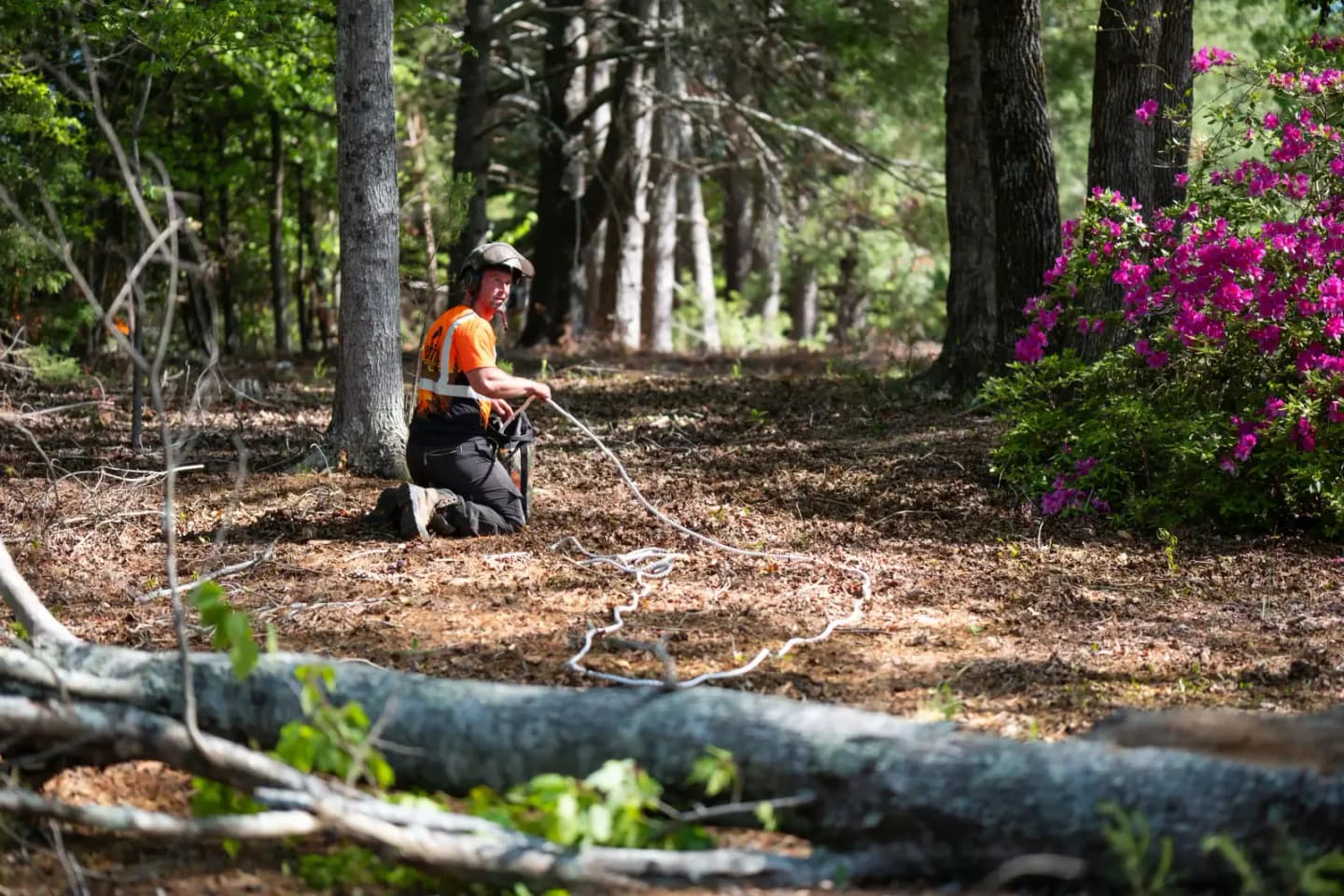
What our arborist sees on site
Disease misidentification is common when homeowners search online. Hypoxylon canker looks like a surface treatment problem — it is not. Armillaria looks like a drainage problem — it is not. Get an arborist diagnosis before spending money on treatments that cannot work.
Ready for a free written estimate?
We visit your property, evaluate the work, and gives you a written price before anything starts. ISA Certified Arborist. No pressure.
Get Free Estimate