When Does a Tree Need Cabling or Bracing?
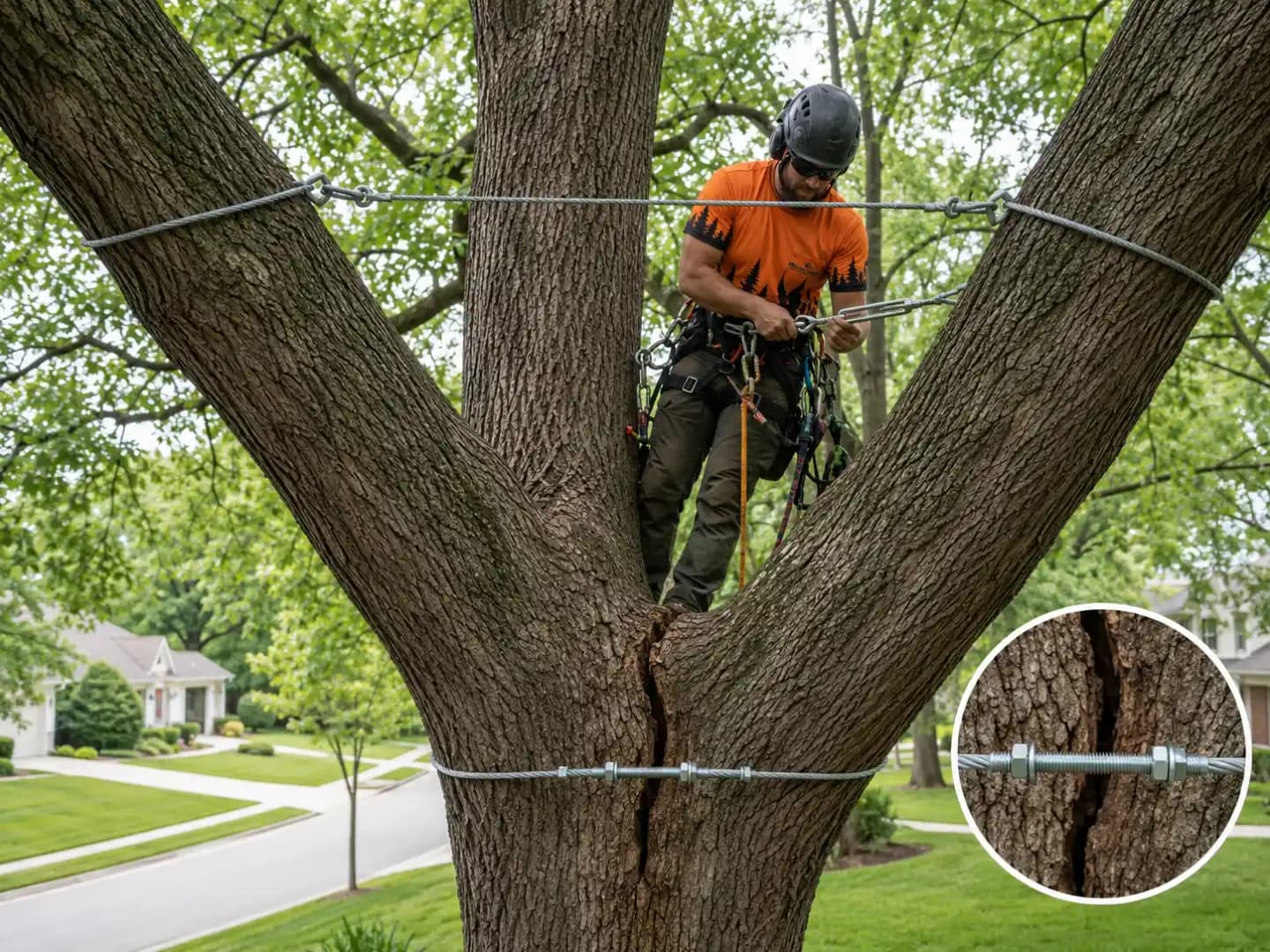
A tree needs cabling when it has co-dominant stems, included bark at a major union, or a split that creates failure risk — and the tree is otherwise healthy enough to be worth saving. Cabling costs $200–$800 for a single cable system. If the defect is too severe or the tree's health is already compromised, removal is the safer call — you'll get an honest assessment either way, and a written estimate before any hardware is installed. In Upstate SC, the trees most commonly cabled are Water Oaks with co-dominant stems — particularly on older residential lots in Greenville, Greer, and Simpsonville where 40–60-year-old trees have developed tight bark inclusions at major leaders. Tulip Poplars with included bark at major scaffold branches are the second most common candidate. ANSI A300 governs cable placement — tree support systems are Clause 7 of the consolidated ANSI A300-2023 standard, previously published as Part 3 —, hardware specifications, and load calculations — the governing standard for every cable installation.
Steel Cable vs. Synthetic — Which System Is Right
High-strength EHS (Extra High Strength) steel cable is the traditional ISA standard for structural cabling. It has very low elongation — critical for load redistribution rather than just movement restriction. Steel hardware (eye bolts, thimbles, cable clamps) is drilled through the stem and locked. The system is nearly invisible in the canopy, lasts 10–15 years with annual inspection, and is what we specify for co-dominant stem failures that require genuine structural support.
Synthetic (Cobra-type) cabling is the alternative for trees where steel hardware installation would be too invasive. Synthetic systems use pre-formed loops around branches — no drilling required. They're more forgiving of tree movement and appropriate for moderate structural defects where flexibility is acceptable. They are not appropriate for severe co-dominant stem failures where the defect requires load redistribution. James Martin, an ISA Certified Arborist (#SO-356834A), specifies the system at the structural assessment — the right choice depends on the specific defect, not on cost.
How Cabling and Bracing Works
Structural Assessment
We evaluate the tree's failure points and determine whether cabling is appropriate or removal is the safer choice.
System Design
Cable placement, load points, hardware specs, and installation height determined based on the specific structural defect.
Installation
Cables threaded and tensioned at the appropriate height. Rod bracing through weak branch unions where cables alone aren't sufficient.
Annual Inspection
Cables require annual inspection and re-tensioning as the tree grows. We schedule return visits and document condition.
Why Martin Tree and Turf Care?
Arborist-led from the first assessment to the final cleanup, with the price in writing before any work starts — and a crew that leaves your property clean.
- ISA Certified Arborist
- TCI Certified
- Licensed & Insured $1M/$2M
- OSHA-Compliant
- 24/7 Emergency Line
- Written Estimates
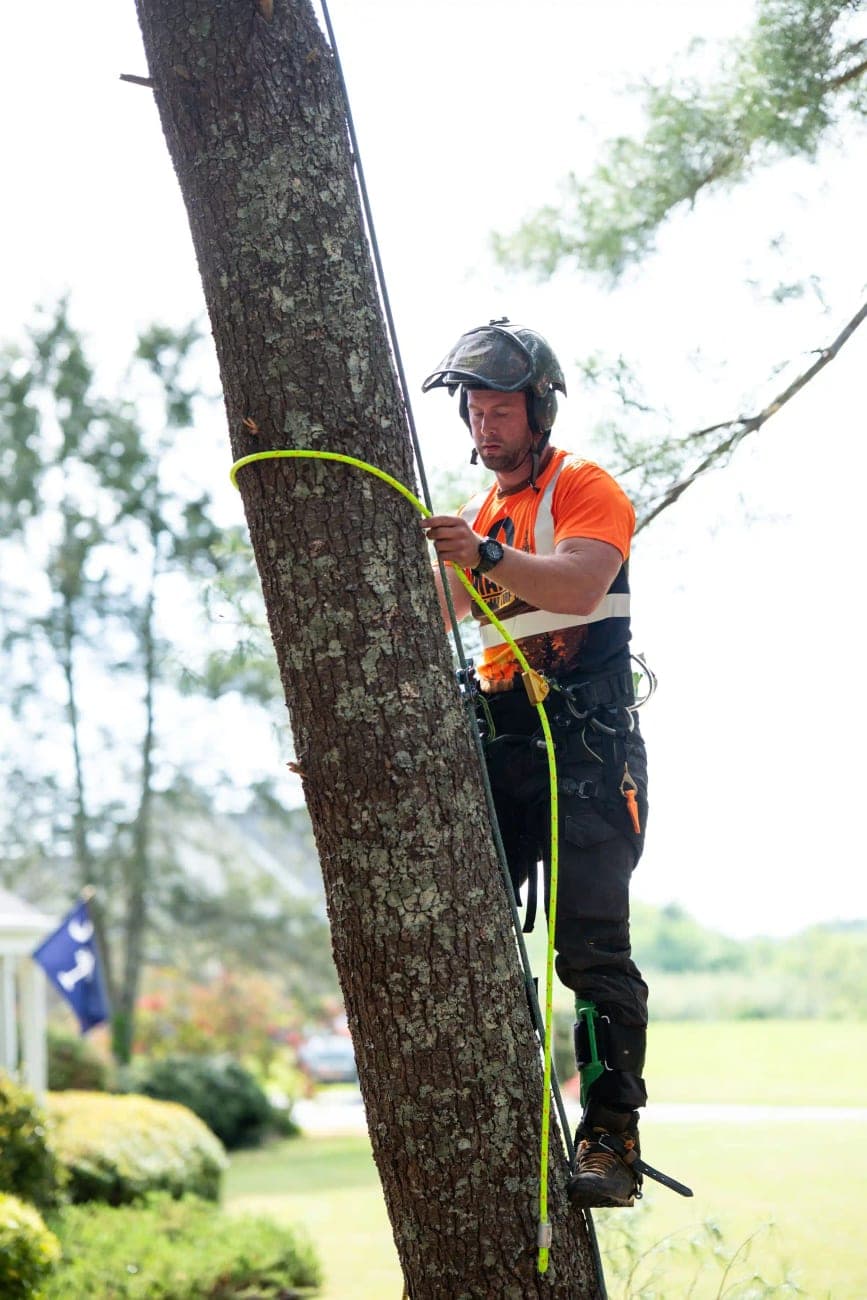
 James Martin, ISA Certified Arborist
Tree Down or Fallen on Your Roof? Same-Day Emergency Response — 24/7.
Don't wait. Our emergency line runs 24 hours, 7 days a week.
Frequently Asked Questions
What Customers Say About Our Work
5.0 stars · 142 Google reviews
"Excellent attention to detail and professional knowledge. Easy to work with, reasonable pricing. I couldn't ask for any better."
"Excellent. I highly recommend. Very conscientious, skilled, professional, and friendly. I will only use this company in the future."
Request a Free Cabling & Bracing Estimate
Fill out the form below and we will follow up to schedule your on-site estimate. Or call directly: (864) 913-3978.
Know Your Exact Price Before Any Work Begins
The certified arborist evaluates your tree in person and puts the price in writing. That's the number you pay — no verbal quotes that change on arrival, no invoice surprises. No pressure. No obligation.
Get Free Estimate