
Bradford pear (Pyrus calleryana 'Bradford') fails structurally at 15–25 years due to co-dominant stem unions with included bark. If your Bradford pear is over 10 years old and has multiple major stems originating from the same point, splitting is a matter of when, not if. South Carolina added callery pear to its State Plant Pest List, and banned its sale in October 2024, because of invasive spread. Removal cost runs $350–$700.
Bradford Pear — Quick Facts
How to Identify Bradford Pear
- White flowers in early spring — distinctive, slightly unpleasant odor
- Multiple major stems originating from the same attachment point (co-dominant union)
- Small, round, hard fruits that attract birds and spread seeds
- Glossy dark green leaves with wavy margins; orange-red fall color
- Dense, upright oval form when young; progressively splitting crown with age
Why Bradford Pear Splits: The Co-Dominant Stem Problem
Bradford pear's failure is structural, not random. The tree produces multiple major stems from the same attachment point, creating co-dominant unions. At each union, included bark — bark tissue growing between the stems where wood fiber should be — prevents the stems from forming a strong structural connection. As the stems grow heavier over decades, the included bark union becomes the weak point. The failure is splitting: the tree divides down the middle, usually during a wind or ice event. This failure mode is predictable from the tree's growth habit and is why arborists recommend against planting Bradford pears. Trees over 15 years old showing co-dominant crack development should be removed proactively.
SC Plant Pest Classification: What It Means
Clemson University's Department of Plant Industry — South Carolina's State Plant Regulatory Official — added Pyrus calleryana (callery pear, including Bradford pear) to the State Plant Pest List. The reason is invasive spread: Bradford pear pollen fertilizes wild callery pear rootstocks, producing thorny, invasive thickets that outcompete native vegetation in disturbed areas, forest edges, and roadsides throughout the Southeast. Selling or trading callery pear cultivars has been banned in South Carolina since October 1, 2024. Existing trees are not subject to mandatory removal, but the classification supports removal decisions. Stump grinding after removal is important — Bradford pear stumps and root tissue resprout aggressively.
Bradford Pear Removal in Upstate SC
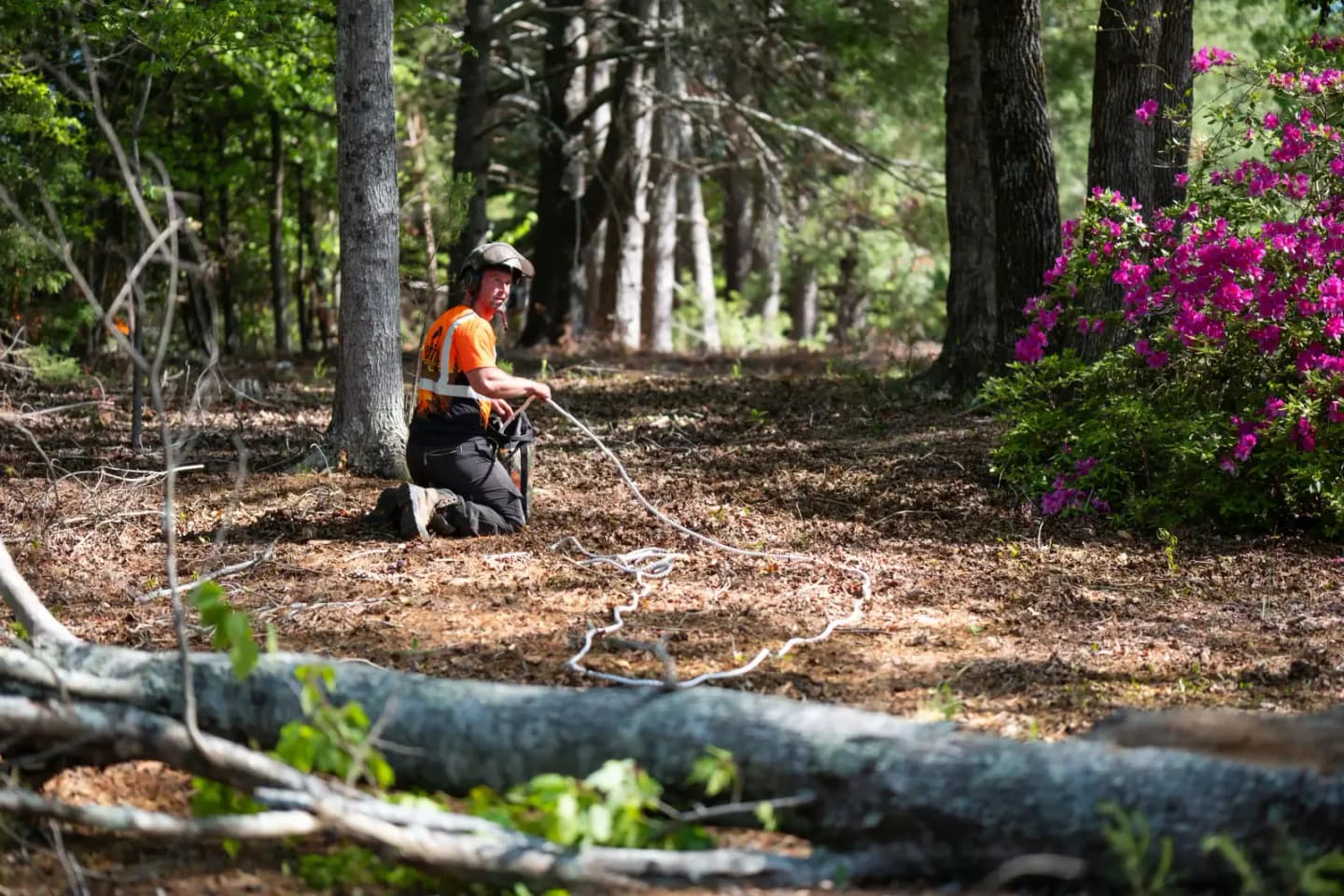
Bradford pear removal typically runs $350–$700 per tree in Upstate SC. They're mid-sized trees — rarely exceeding 30 feet — so removal in an open setting is straightforward. Trees that have already partially split require more careful sectional removal; felling a split tree that's still attached at the base can send the split section in an uncontrolled direction. Stump grinding is strongly recommended — callery pear resprouts aggressively from the stump and from lateral roots within the grind zone if stump grinding doesn't remove the root collar completely. If sprouts appear after grinding, treat with a cut-stump herbicide.
What to Plant Instead: Native Alternatives
Serviceberry (Amelanchier arborea): native, spring flowers, edible berries, fall color, 15–25 foot mature height — a direct aesthetic replacement without the structural problems. Eastern redbud (Cercis canadensis): native, spectacular early spring bloom before leaves emerge, 20–30 feet, good structure. Native plum (Prunus americana): spring flowers, edible fruit, 15–25 feet, pollinator value. For a larger shade tree to replace the lost canopy: white oak or willow oak, both native with strong structure and long lifespan. Consult with Martin Tree and Turf Care during an arborist visit for species recommendations specific to your site.
Greenville Permit Considerations for Bradford Pear
Inside Greenville city limits, every tree removal requires a permit regardless of trunk size — that includes an invasive Bradford pear. The permit is fast and easy to get, and an arborist report is not required. Outside city limits, in unincorporated Greenville County, most residential removals do not require a permit. Our ISA Certified Arborist assesses each Bradford pear on-site, and Martin Tree and Turf Care handles the permit documentation as part of every Greenville city removal project.