
Tulip poplar (Liriodendron tulipifera) is the tallest native tree in Upstate SC, commonly reaching 90–120 feet at maturity. Its height and rapid growth make it one of the most challenging residential tree removal jobs in arboriculture — and one of the most common large-tree removal calls we receive. Removal cost for large tulip poplars in tight residential settings typically runs $2,500–$5,000 with crane assistance.
How to Identify Tulip Poplar
- Distinctive 4-lobed leaves shaped like a tulip outline — the most recognizable feature
- Tulip-shaped flowers in May with orange and green petals (visible near the top in large trees)
- Smooth gray bark on young trees becoming deeply furrowed on mature specimens
- Straight, tall, single trunk to full height — rarely branching low
- Yellow fall color; large cone-like seed clusters persist through winter
Why Tulip Poplar Heights Make Removal Challenging
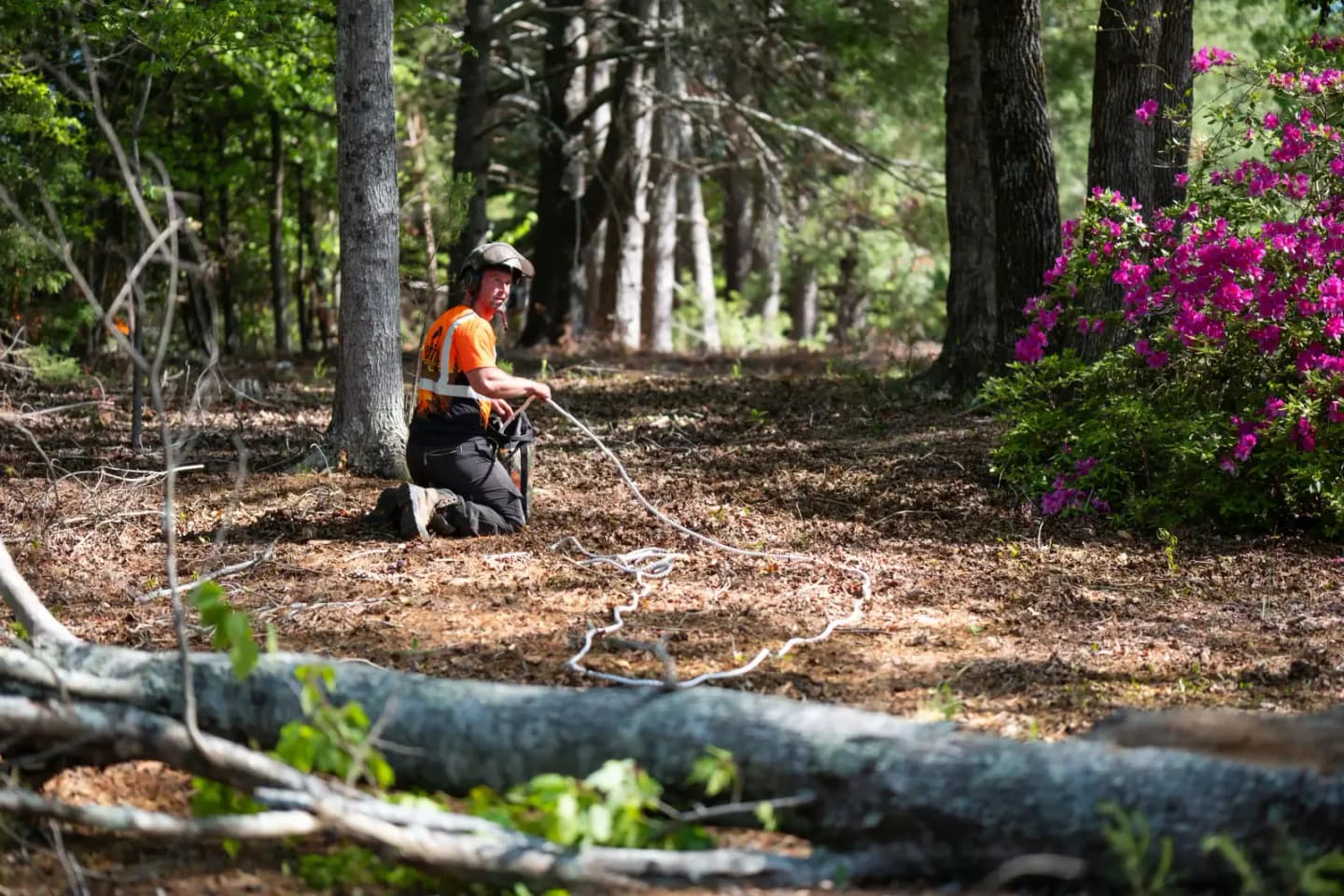
Tulip poplar routinely reaches 90–120 feet in Upstate SC residential and woodland settings. A 100-foot tulip poplar behind a house is one of the most technically demanding tree removals in residential arboriculture — the tree mass at height is enormous, sections cut from the top are heavy, and the fall radius covers everything within 100+ feet. Conventional felling is not an option near structures. Aerial work with lowering requires multiple rigging points and controlled lowering of large sections. Crane-assisted removal is the preferred method for large tulip poplars over or near structures. Martin Tree and Turf Care has removed 90+ foot tulip poplars in Greenville, Spartanburg, and Greer neighborhoods using coordinated crane-assisted removal.
Wind and Ice Failure Risk
Tulip poplar's height is its primary structural liability. A tree that is 100 feet tall has a significantly larger lever arm than a 50-foot tree — the same wind speed exerts proportionally more force at the trunk base. Upstate SC ice storms in particular affect tulip poplar severely: ice loading on a 100-foot crown can reach thousands of pounds, and breakage typically occurs at major lateral branch unions in the upper canopy. Half a tulip poplar crown falling from 80 feet can destroy a garage, fence, or roof. Tulip poplars that overhang structures should be assessed annually for crown condition and structural soundness.
Pruning Tulip Poplar — What Helps and What Does Not
Crown reduction is the primary tool for managing tulip poplar risk. Reducing the crown height from 100 feet to 70 feet by making proper lateral pruning cuts reduces the wind sail area and lever arm significantly. This is not topping — it is structural crown reduction following ANSI A300 standards, making cuts at lateral branches large enough to sustain the new leader. Dead wood removal eliminates the branches most likely to fail. What does not help: topping (which creates decay and weakly attached regrowth), excessive crown thinning (which can increase wind turbulence through the crown), and removing lower branches without addressing upper crown mass. A crown reduction by an ISA Certified Arborist with experience on large tulip poplars is the appropriate management approach.