Water oak (Quercus nigra) is one of the most frequently removed trees in Upstate SC. It grows rapidly in moist bottomland soils, reaches 60–80 feet, and typically enters decline at 40–60 years — often with Armillaria root rot as the underlying cause. Most water oaks Martin Tree and Turf Care removes in Greenville and Spartanburg neighborhoods are entering their natural decline phase, frequently with structural root compromise that is not visible from the crown.
How to Identify Water Oak
- Duck-foot shaped leaves — wider at the tip, narrowing toward the stem; highly variable across the same tree
- Bark is dark gray to black, deeply furrowed on mature trees
- Acorns are small, nearly round, very dark at maturity
- Grows in moist areas — creek bottoms, drainage swales, low-lying yards
- Fast growth rate; reaches 60–80 feet in 40–60 years in Upstate SC
Why Water Oaks Decline So Quickly
Water oak is a pioneer species — it colonizes disturbed sites and bottomlands quickly, reaches full size in 40–60 years, then declines. Unlike white oak or willow oak, which can live 200–400 years, water oak has a natural lifespan of 60–80 years. Most of the water oaks we remove in Greenville and Spartanburg neighborhoods are 40–60 years old and showing rapid decline for the first time. The decline is frequently accelerated by Armillaria root rot, which attacks stressed root systems. Once a water oak begins showing sparse crown and dead scaffold branches, decline is typically irreversible within 2–5 years.
Armillaria Root Rot and Water Oak
Water oak is among the most susceptible species in Upstate SC to Armillaria mellea root rot. The fungus attacks the root crown and primary lateral roots, often killing them while the crown still appears mostly green. Honey-colored mushrooms at the base of the tree in late summer are the visible sign. By the time mushrooms appear, significant structural root loss has usually occurred. A water oak with Armillaria at the base and a partially sparse crown is typically a removal candidate — the decay compromises the root plate anchoring the entire tree. See the Armillaria Root Rot guide for full identification and assessment details.
Removal Considerations for Water Oak
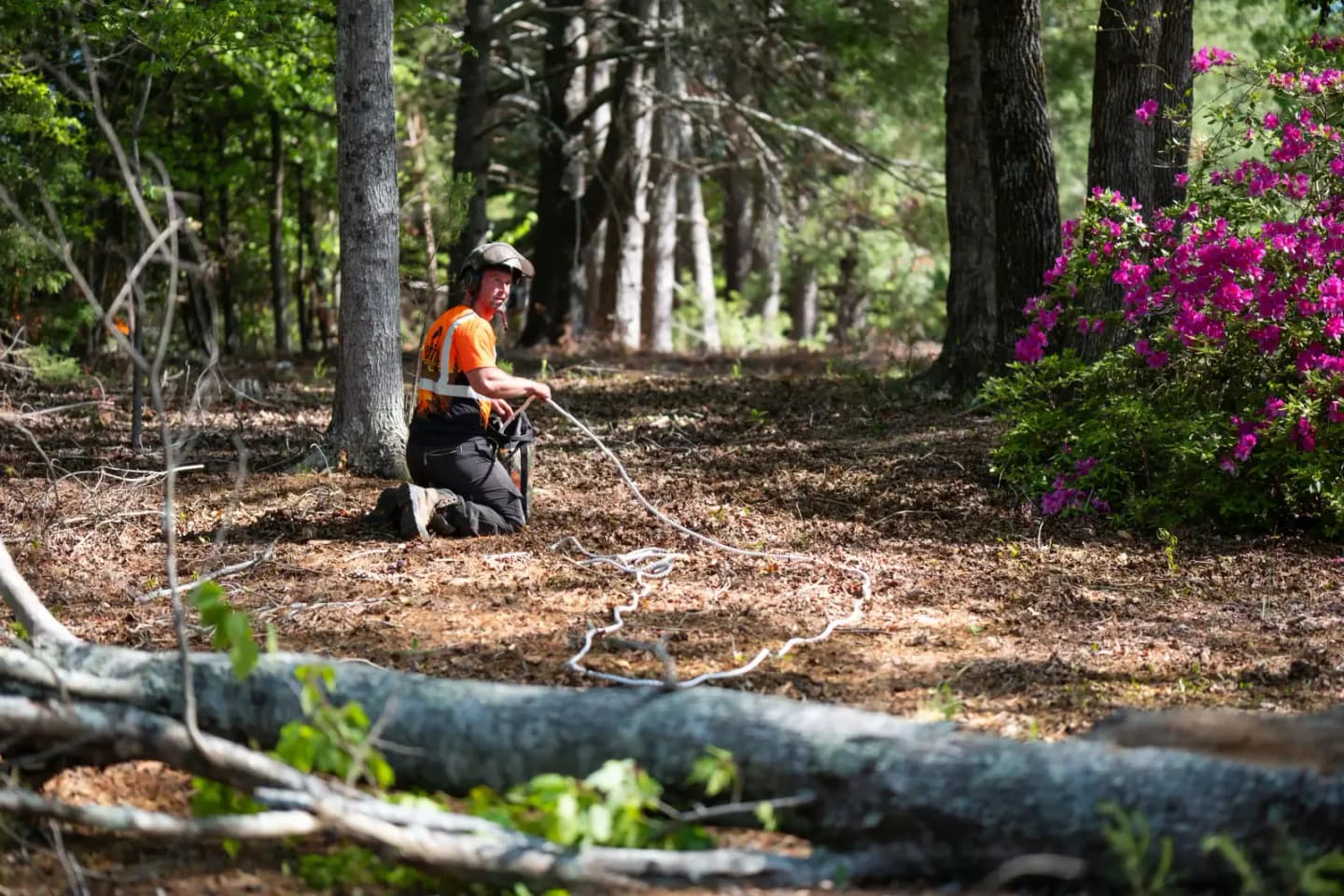
Water oak has a brittle wood structure relative to other oaks — dead branches break more readily than in white oak or willow oak. A water oak in late-stage decline drops large dead branches unpredictably, particularly during wind events. This makes them a higher-urgency removal compared to a comparable-stage willow oak. Water oaks also frequently grow in low-lying areas with access limitations — wet soil conditions, proximity to structures, or creek-edge locations where conventional felling is not possible. Our crew evaluates each site for the safest removal method, including crane-assisted work when conventional access is limited.