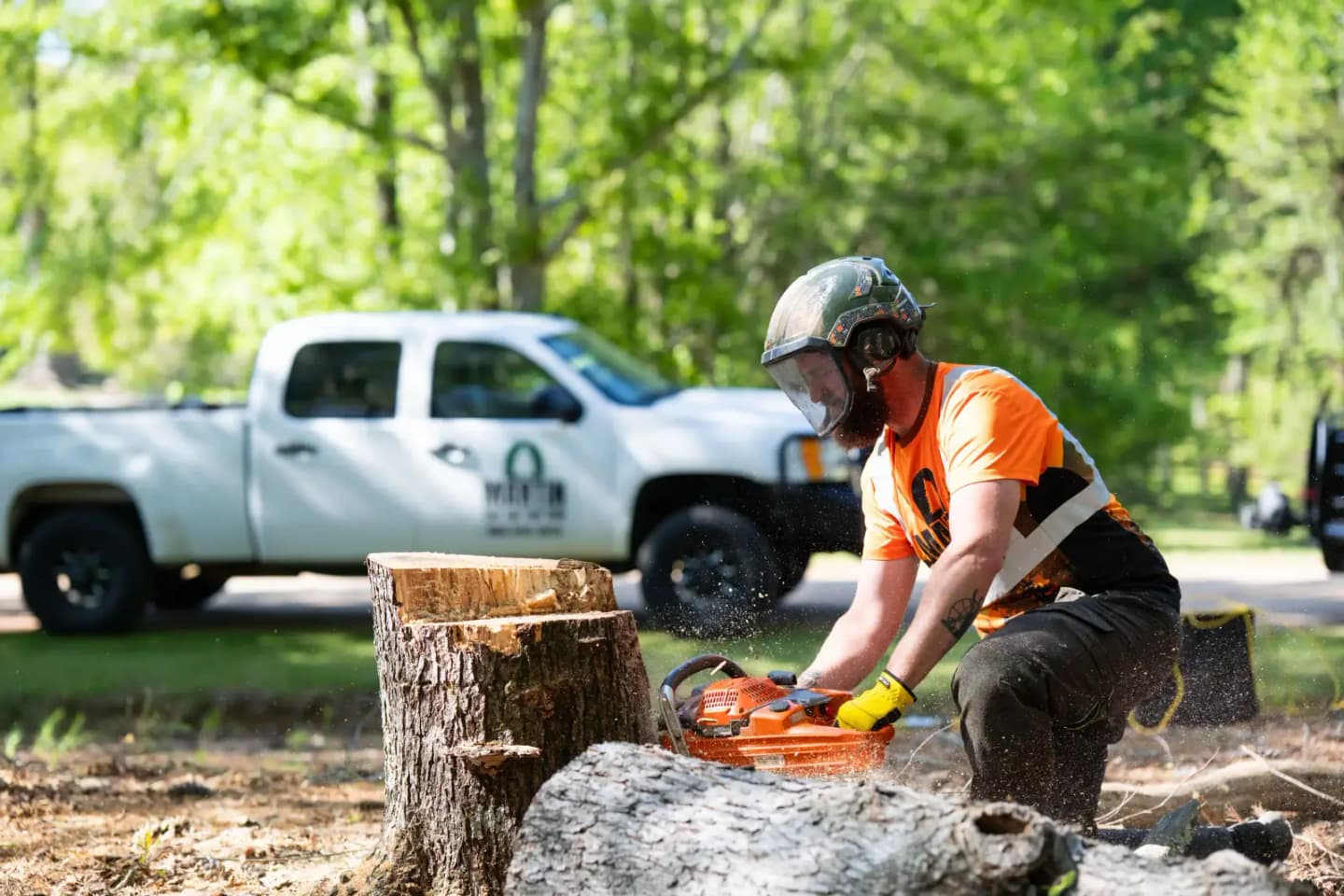

Stump Grinding vs. Stump Removal: The Short Answer
Stump grinding chips the stump 6–8 inches below grade using a rotating cutting wheel. The roots stay in the ground and decay over 5–10 years. Cost: $75–$350+ per stump. Stump removal, sometimes called full stump excavation, pulls the entire root ball out of the ground using heavy equipment. The hole is larger, the job takes longer, and it costs more: $200–$1,200+ depending on root mass. For replacing with sod, mulch, or landscape plants, grinding is the right call. Full removal is necessary only when you need to replant a tree in the same spot or when roots are actively damaging a structure.
| Factor | Stump Grinding | Stump Removal |
|---|---|---|
| Cost | $75–$250/stump | $200–$1,200+/stump |
| What stays in ground | Root system (decays over years) | Nothing, full excavation |
| Disruption to yard | Minimal: stump area only | Significant: large hole and root mass |
| Time on site | 30–90 min per stump | 1–4 hrs per stump |
| Can replant same spot? | Not immediately (2–5 yr wait) | Yes, immediately |
| Best for | Sod, mulch, general landscaping | New tree planting, foundation work |
When to Choose Stump Grinding
Stump grinding is the right call in the majority of residential situations. The roots left underground pose no ongoing hazard. They can't produce new growth once the stump connection is severed, and they break down naturally over a few years. The ground over a ground stump can be sodded, seeded, or planted with shrubs within a few weeks.
Martin Tree and Turf Care grinds stumps 6–8 inches below grade as standard practice: deep enough that there's no visible remnant and no tripping hazard. If you need deeper grinding for a specific project, request it at the estimate.
When to Choose Full Stump Removal
Full stump removal, excavating the root ball, is necessary in specific situations where the root mass itself is the problem, not just the visible stump.
If you're unsure which method your situation calls for, James Martin will assess the site and give you a straight answer at the free estimate visit, not the upsell.
How Much Does Stump Grinding and Stump Removal Cost in Upstate SC?
Stump diameter is the primary cost driver for grinding. Root mass size and excavation complexity drive removal pricing. Both are quoted after a site visit. There's no accurate way to price either service over the phone without seeing the stump.
| Stump Size | Grinding Cost | Full Removal Cost |
|---|---|---|
| Small (under 12 in) | $100–$175 | $200–$350 |
| Medium (12–24 in) | $175–$300 | $300–$600 |
| Large (24–36 in) | $250–$450 | $500–$900 |
| Very large (36 in+) | $400–$500 | $800–$1,200+ |
Multi-stump jobs are discounted: two stumps on the same property cost roughly 80% of two separate quotes. Call (864) 913-3978 or use the form below for a free written estimate.
Frequently Asked Questions
What is the difference between stump grinding and stump removal?
Stump grinding uses a rotating cutting wheel to chip the stump 6–8 inches below grade. The root system stays in the ground and decays naturally over several years. Stump removal, sometimes called full stump excavation, uses heavy equipment to physically pull the entire root ball out of the ground. Grinding is faster, cheaper, and sufficient for most homeowners. Full removal is necessary when you need to replant a tree in the same spot or when a root system is actively damaging a foundation or utility line.
Is stump removal more expensive than stump grinding?
Yes, significantly. Stump grinding in Upstate SC runs $75–$350+ per stump depending on diameter. Full stump removal, excavating the root ball, runs $200–$500 per stump for smaller trees and $500–$1,200+ for large oaks or pines with extensive root systems. The price difference reflects the equipment required: a stump grinder versus an excavator or backhoe, plus the labor to extract and haul a root mass that can weigh hundreds of pounds.
How long does stump grinding take?
Most residential stump grinding jobs take 30–90 minutes per stump. A small ornamental stump under 12 inches in diameter takes 20–30 minutes. A large oak stump over 30 inches can take 60–90 minutes. Multi-stump jobs on the same property are discounted because setup and travel are shared costs.
Can I plant a new tree in the same spot after stump grinding?
Not immediately. After grinding, the remaining root mass decays over 5–10 years. Planting a new tree of the same species in that location risks Armillaria root rot. A fungal infection that spreads from decaying roots to living ones. If you want to replant in the same spot, either wait 3–5 years, choose a different species, or request full stump removal that clears the root system entirely.
Will tree roots keep growing after stump grinding?
No. Once the stump is ground down and the connection between roots and any live growth is severed, the roots can no longer produce new growth. They decompose in place over several years. Surface roots that extend away from the stump can also be ground down as part of the same job. Ask about root flare grinding at the time of estimate.
Will Bradford pear stumps sprout if only ground down?
Bradford pears and callery pear rootstocks are aggressive sprouters. Grinding to 8–10 inches below grade kills the above-grade stump and significantly reduces sprouting. Occasionally a lateral root will push a sprout. Those can be cut or treated. Grinding is still the right approach for most Bradford pear situations.
How do I know which method is right for my situation?
For most residential situations (lawn, landscaping, garden) stump grinding is the right answer. If you're building over the site within a few years, complete removal is worth discussing. Martin Tree and Turf Care can assess your specific stump and site conditions and give you a written estimate for both options.
Know Your Exact Price Before Any Work Begins
The certified arborist evaluates your tree in person and puts the price in writing. That's the number you pay: no verbal quotes that change on arrival, no invoice surprises. No pressure. No obligation.
Get Free Estimate