Published May 27, 2026
A dead tree can stand for months or years before it falls — but the risk of failure increases the longer it stays up. In Upstate South Carolina, the most common tree failures involve Loblolly Pine with root rot, Water Oak with Hypoxylon canker, and Bradford Pear splitting at the co-dominant stem. Knowing the warning signs lets you act before the tree acts for you.
7 Warning Signs of a Dead or Dying Tree
Leafless crown during growing season: If a deciduous tree fails to leaf out in spring, or drops leaves early, the tree is in severe decline or dead. No bark on major limbs: Dead wood sheds bark over time, exposing dry, grey wood underneath. Fungal growth at the base: Shelf fungi (conks) at the root flare or base of the trunk indicate internal decay — often advanced by the time conks appear. Vertical cracks in the trunk: Deep splits running vertically indicate internal failure, especially in oaks, tulip poplars, and maples. Hanging or dead branches (widow-makers): Dead branches retained in the crown will fall without warning — they pose immediate hazard to anything below. Leaning that developed suddenly: Trees that have always leaned are usually stable. A lean that developed over weeks or months indicates root failure or internal failure. Bark separation and peeling: Large sections of bark separating from the trunk (not normal shedding) indicate cambium death and tree decline.
Dead vs. Dormant — How to Tell the Difference
In winter, a healthy deciduous tree looks dead. Before calling for removal, do the scratch test: use a fingernail to scratch a small patch of bark on a young twig. Healthy wood is green and slightly moist beneath the bark. Dead wood is brown and dry throughout. Test 5–6 twigs across the crown. If the majority are dead, the tree is declining or dead. If even a few show green, the tree may still be alive — call a certified arborist before making a removal decision.
Species Most Prone to Failure in Upstate SC
Loblolly Pine: Fast-growing, shallow root plate, highly susceptible to root rot (Heterobasidion annosum). Fails by uprooting during wind events with no visible warning above ground. Water Oak: Susceptible to Hypoxylon canker and bacterial wetwood. Internal decay is often advanced before any crown symptoms appear — trunk sounding (tapping) by an arborist detects hollow sections. Bradford/Callery Pear: Co-dominant stems with included bark create a structural failure point. These trees split at the union predictably at 15–25 years, often in moderate wind or rain — no rot required. Mimosa (Silktree): Fast-growing, brittle wood, fails in any significant wind event. White Pine: Susceptible to White Pine Blister Rust and pine wilt. Crown browning from the bottom up is a warning sign.
When to Call a Certified Arborist
Call an ISA Certified Arborist if: the tree is within falling distance of a structure, vehicle, or occupied outdoor area; you see fungal conks, significant bark loss, or a new lean; the tree has already dropped large limbs; or you are preparing documentation for an insurance claim or permit. A formal ISA risk assessment documents the condition, assigns a failure probability, and provides written documentation that protects you legally if a neighbor questions the removal.
What Happens If You Wait Too Long
A dead tree left standing eventually fails — the question is when and in what direction. As wood dries and weakens, the cost of removal increases because dead wood is unpredictable to rig. Dead hardwoods become brittle within 1–3 years; dead pines can remain standing longer but the root plate degrades. Insurance will cover removal if a dead tree damages your property in a storm — but your adjuster will ask whether you knew the tree was dead. A documented arborist assessment protects you in that conversation.
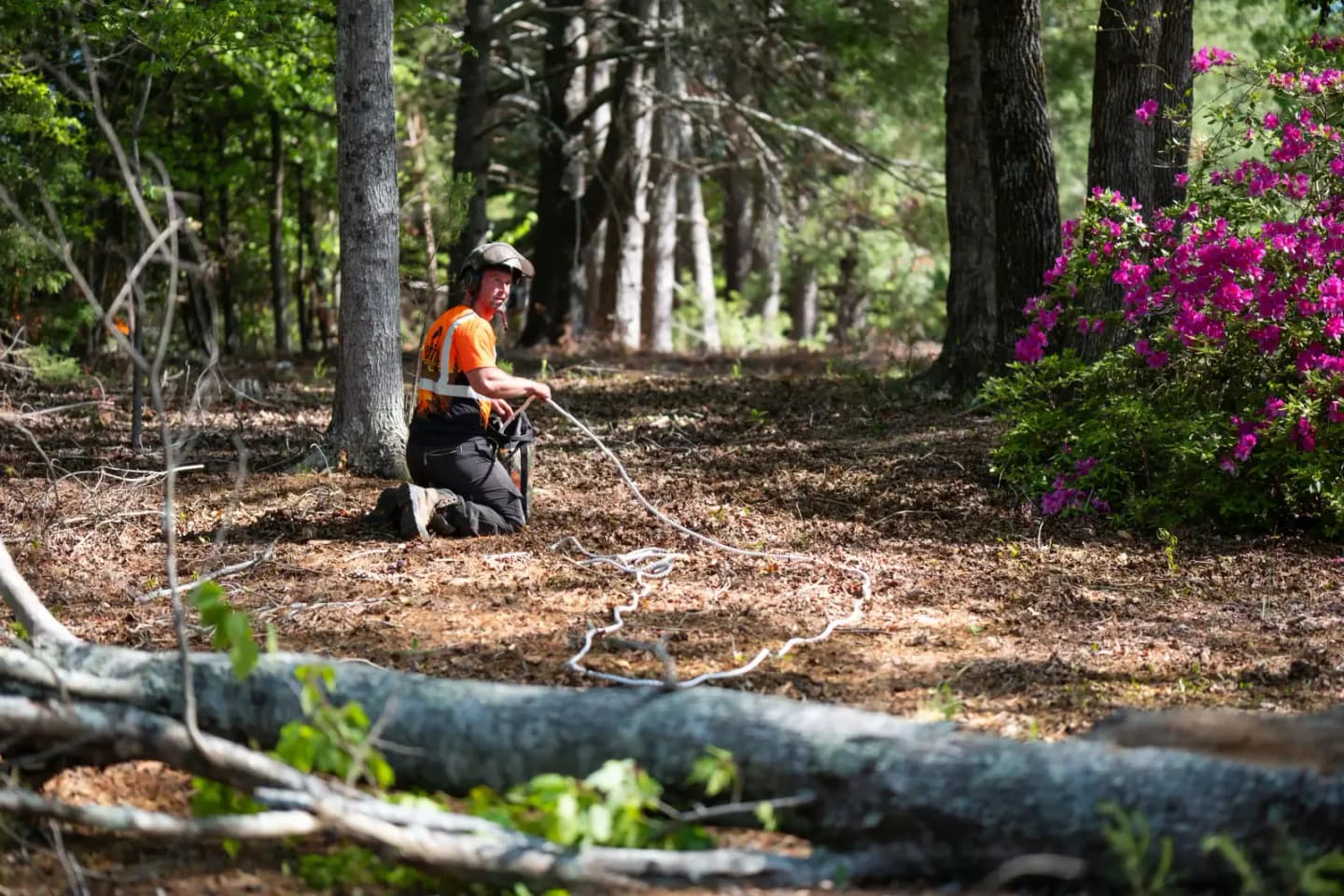
What our arborist sees on site
If you are not sure whether your tree is dead, dying, or just stressed — call before you decide. A 30-minute on-site assessment tells you exactly what you are dealing with, what the failure risk is, and what your options are. That is worth more than a Google search.
Ready for a free written estimate?
We visit your property, evaluate the work, and gives you a written price before anything starts. ISA Certified Arborist. No pressure.
Get Free Estimate